
The Complete Bengali Wedding Photography Guide: Moments, Rituals and Planning
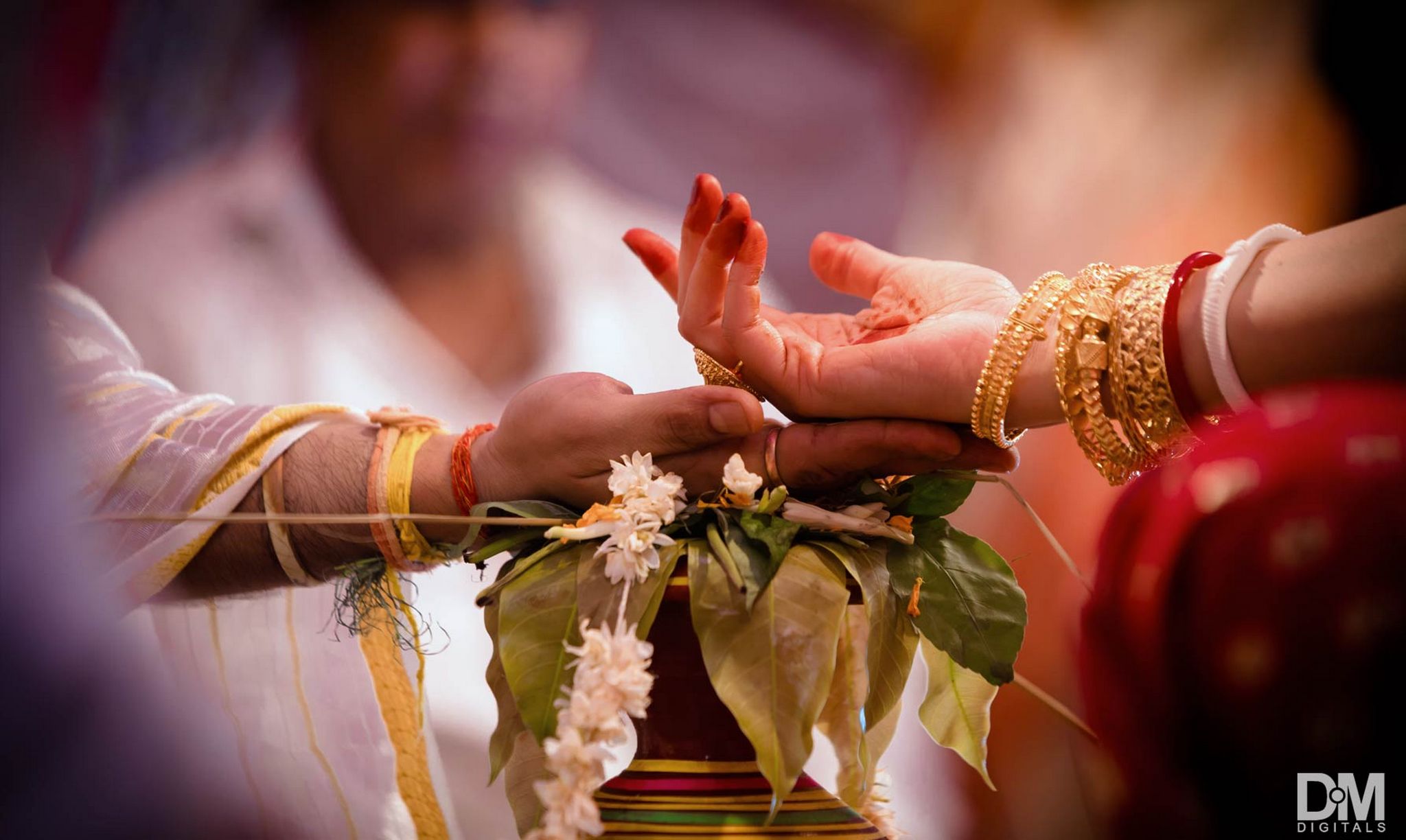
A Bengali wedding is much more than a single wedding ceremony. It is a collection of traditions, families, emotions, colours and small moments that gradually build towards the wedding itself. For a photographer, understanding those moments is just as important as knowing how to operate a camera. At DM Digitals, we have been photographing weddings and family celebrations since 2000. Over the years, one thing has remained unchanged: every Bengali wedding follows traditions, but every family experiences those traditions differently.
That is why we believe Bengali wedding photography should document both the rituals and the people surrounding them.
Photography Begins Before the Wedding Day
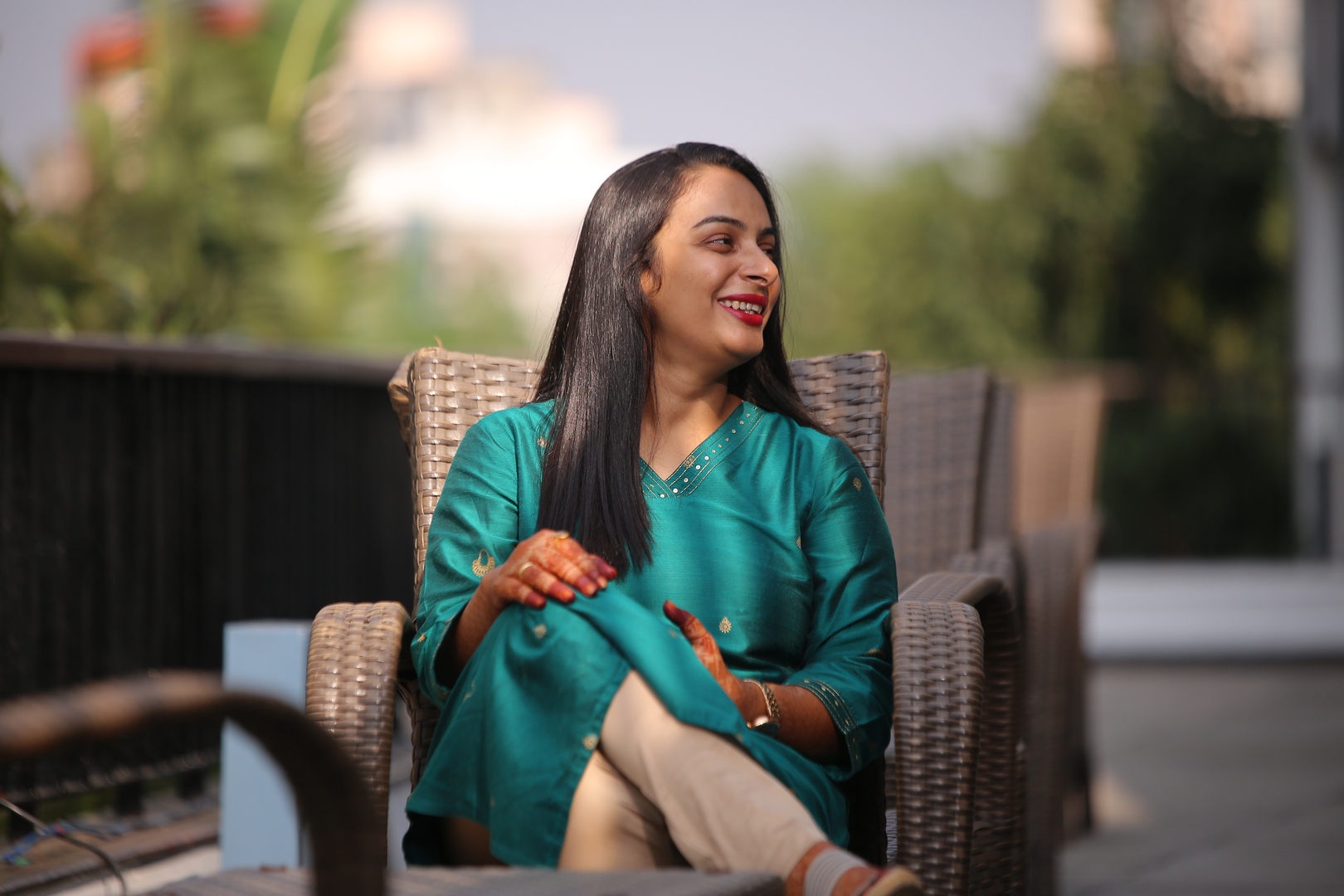
Some of the most memorable wedding photographs are created before the main ceremony. Depending on the family, celebrations may include Aiburobhat, Gaye Holud, Mehendi, Sangeet or smaller gatherings at home. These events usually have fewer formal restrictions than the main wedding and therefore provide excellent opportunities for natural photography. Parents preparing for ceremonies, relatives decorating the house, friends teasing the bride or groom and grandparents watching the celebrations often create photographs that become especially meaningful later.
Gaye Holud
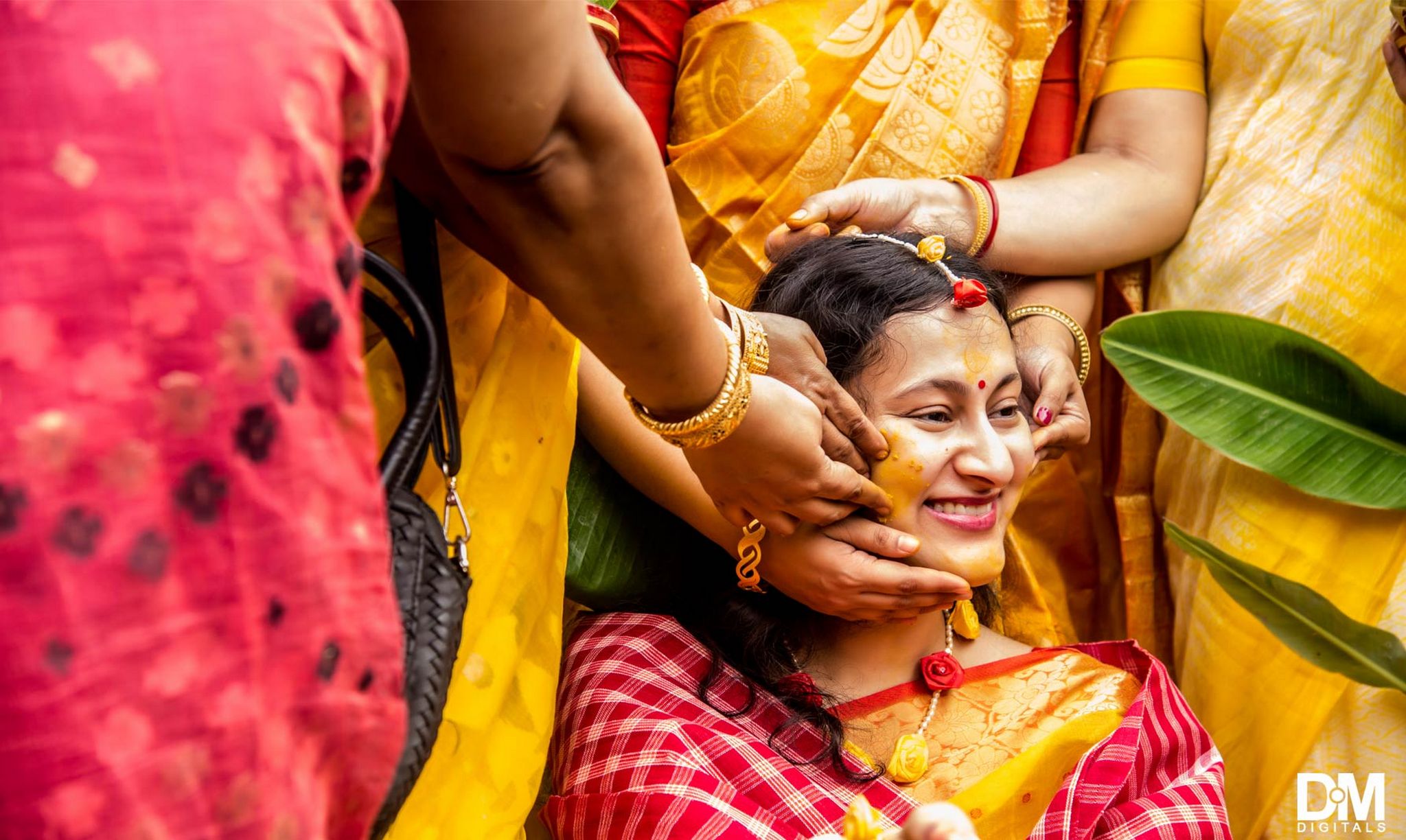
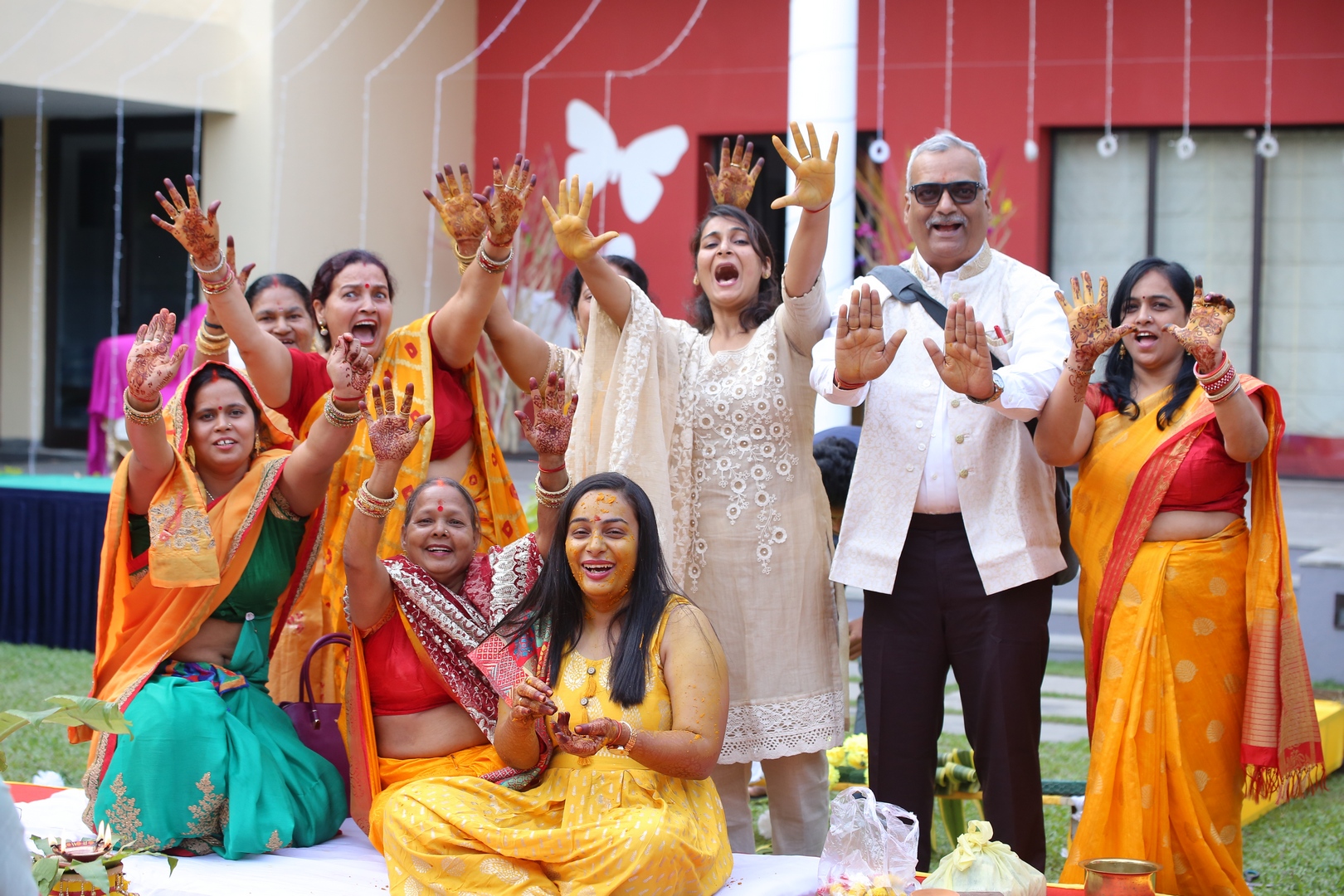
Gaye Holud is one of the most colourful parts of many Bengali weddings. However, good photographs of the ceremony are not simply about photographing yellow turmeric. The important moments are often the expressions surrounding it. The reaction of the bride or groom when relatives apply turmeric, laughter between siblings, parents participating in the ritual and friends turning the ceremony into a celebration are what give the photographs personality. A photographer should anticipate these moments rather than constantly asking people to repeat them.
Bridal Preparation
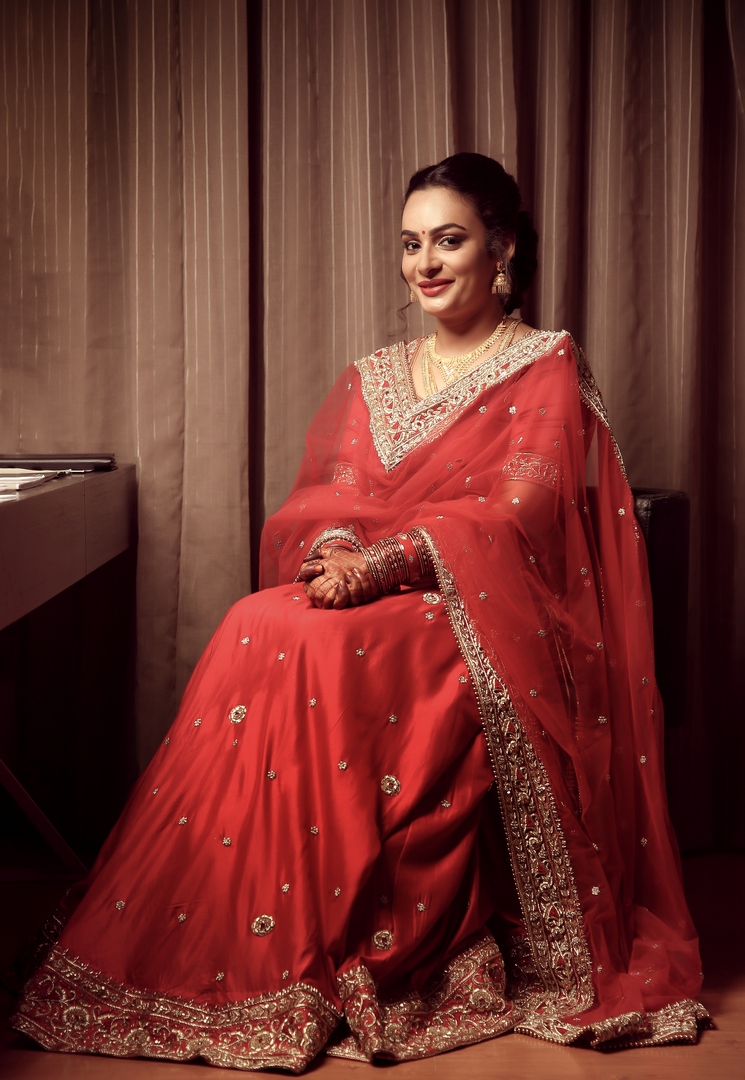
Bridal preparation offers a completely different photographic atmosphere. The room may be busy, emotional and occasionally chaotic. There are details to photograph—the saree, jewellery, alta, shakha-pola, mukut and flowers—but the human moments are usually more important. A mother’s expression while looking at her daughter, a final adjustment by a sibling or a quiet moment when the bride sees herself completely dressed can tell more of the story than a carefully arranged photograph of jewellery alone. We normally like to photograph a combination of details, portraits and natural moments during this part of the day.
Groom Preparation
Groom preparation is sometimes overlooked. It shouldn’t be.
Photographs with parents, siblings and friends provide an important counterpart to the bride’s preparation. These images also help the final wedding album or film tell the complete story of both families rather than concentrating entirely on one side.
Bor Jatri and Bor Boron
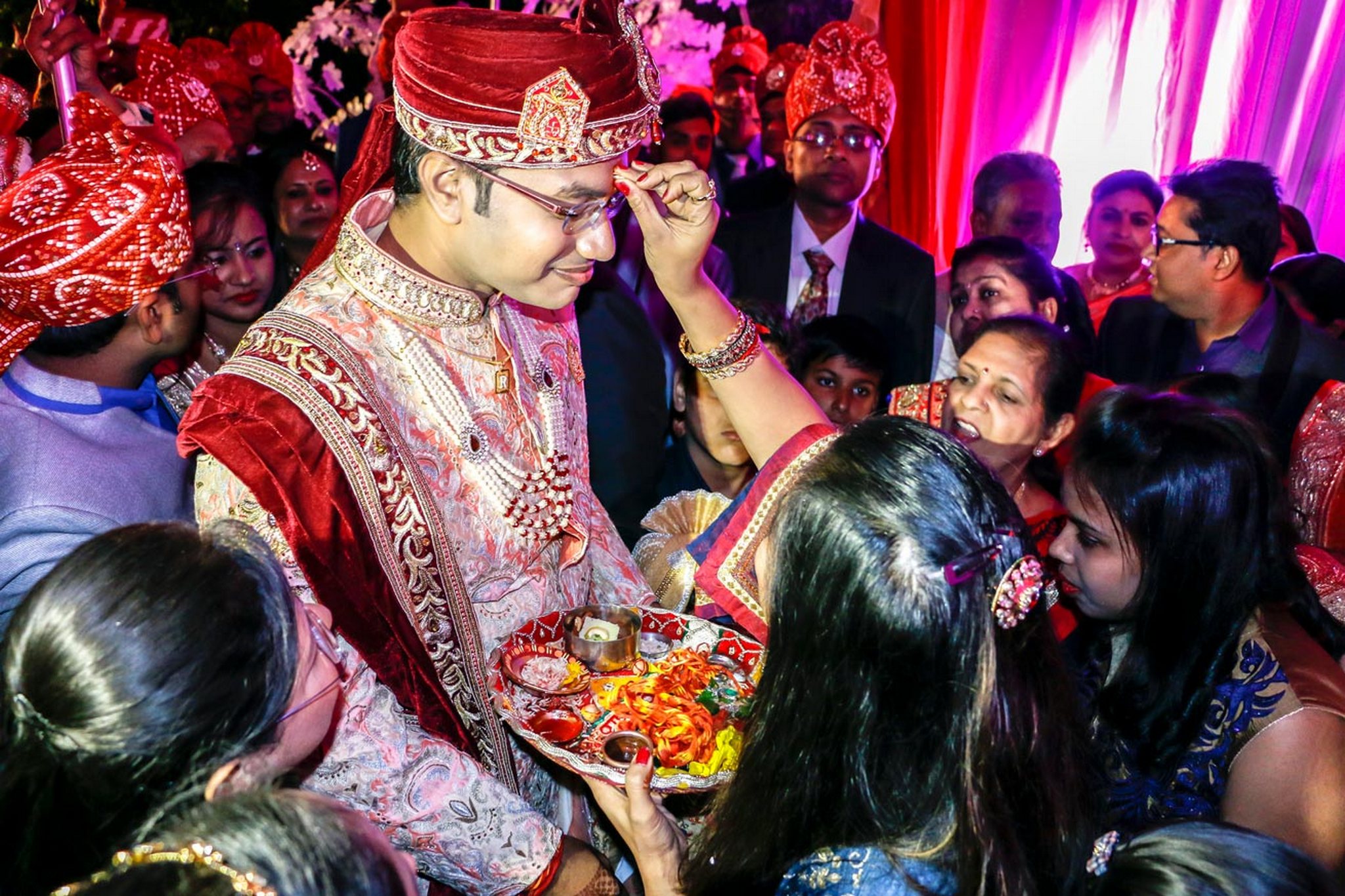
The arrival of the groom can become one of the most energetic portions of the wedding. The atmosphere changes quickly. Guests arrive, family members gather near the entrance and several important interactions happen within a few minutes. An experienced wedding team should know where photographers need to position themselves before the groom arrives. One photographer may concentrate on the groom while another photographs the reactions of the bride’s family. This is one reason team planning matters in larger weddings.
Saat Paak
Saat Paak creates some of the most recognisable images of a Bengali wedding. The bride is traditionally carried around the groom while her face remains covered. The challenge for the photographer is that the movement happens quickly and the surrounding space can become crowded. The team has to anticipate the direction of movement and position cameras before the ritual begins. Good photographs should show more than just the couple. Family members carrying the bride and the reactions of people surrounding them are part of the moment.
Subho Drishti
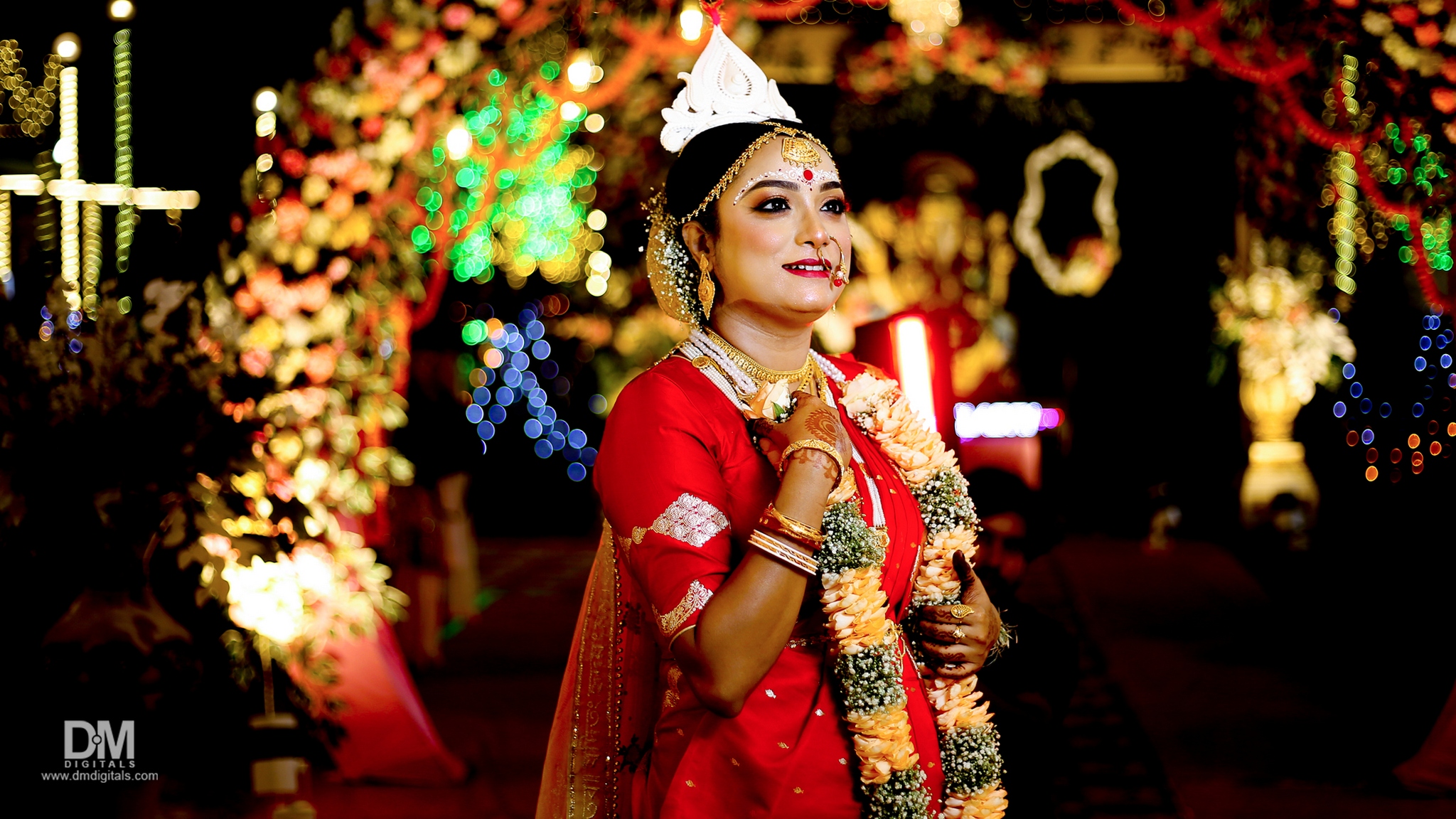
Subho Drishti is one of those moments photographers cannot ask a couple to genuinely repeat. The first exchange of looks between bride and groom is brief. Camera position, lens choice and communication between photographers therefore become important. Ideally, the final gallery should contain both the close expression of the couple and a wider photograph showing the ceremony around them.
Mala Badal
Mala Badal can change from romantic to extremely energetic within seconds. Friends and family sometimes lift the bride or groom, creating laughter and movement. Photographers need enough space to document the exchange without obstructing the ceremony. This is also a good example of why candid and traditional coverage should work together rather than separately. One camera can document the ceremony clearly while another looks for reactions and spontaneous moments around it.
Sampradan
Some wedding moments are quiet rather than spectacular. Sampradan is one of them. The expressions of parents and elders can be more powerful than elaborate portraits. Photographers should be sensitive during ceremonies like this. Not every emotional moment requires getting extremely close to someone’s face. Sometimes documenting the scene respectfully from a little distance creates the stronger photograph.
Sindoor Daan
Sindoor Daan is another important moment that happens quickly. Good preparation matters. The photography team should already understand the ceremony position, available light and surrounding space before it begins. The goal is to document the ritual without interrupting its natural flow.
Candid and Traditional Photography Work Together
Couples sometimes ask whether they should choose candid or traditional photography. For a Bengali wedding, we rarely see them as competitors. Traditional photography ensures that rituals, elders and important family groups are properly documented.
Candid photography concentrates on reactions, expressions and unscripted moments. A complete wedding story usually needs both. Twenty years later, the carefully arranged photograph with grandparents may be just as valuable as the beautiful candid portrait taken during the ceremony.
Family Photographs Need Planning
Large Indian weddings can have hundreds of guests. Trying to create every family photograph spontaneously during the ceremony usually creates confusion. We recommend preparing a small list of essential family groups before the wedding.
For example:
Bride with parents
Bride with siblings
Groom with parents
Groom with siblings
Couple with both families
Couple with grandparents
Close relatives
Close friends
These photographs do not need complicated poses.
What matters is making sure important people are not accidentally missed.
Lighting Is Important in Bengali Wedding Venues
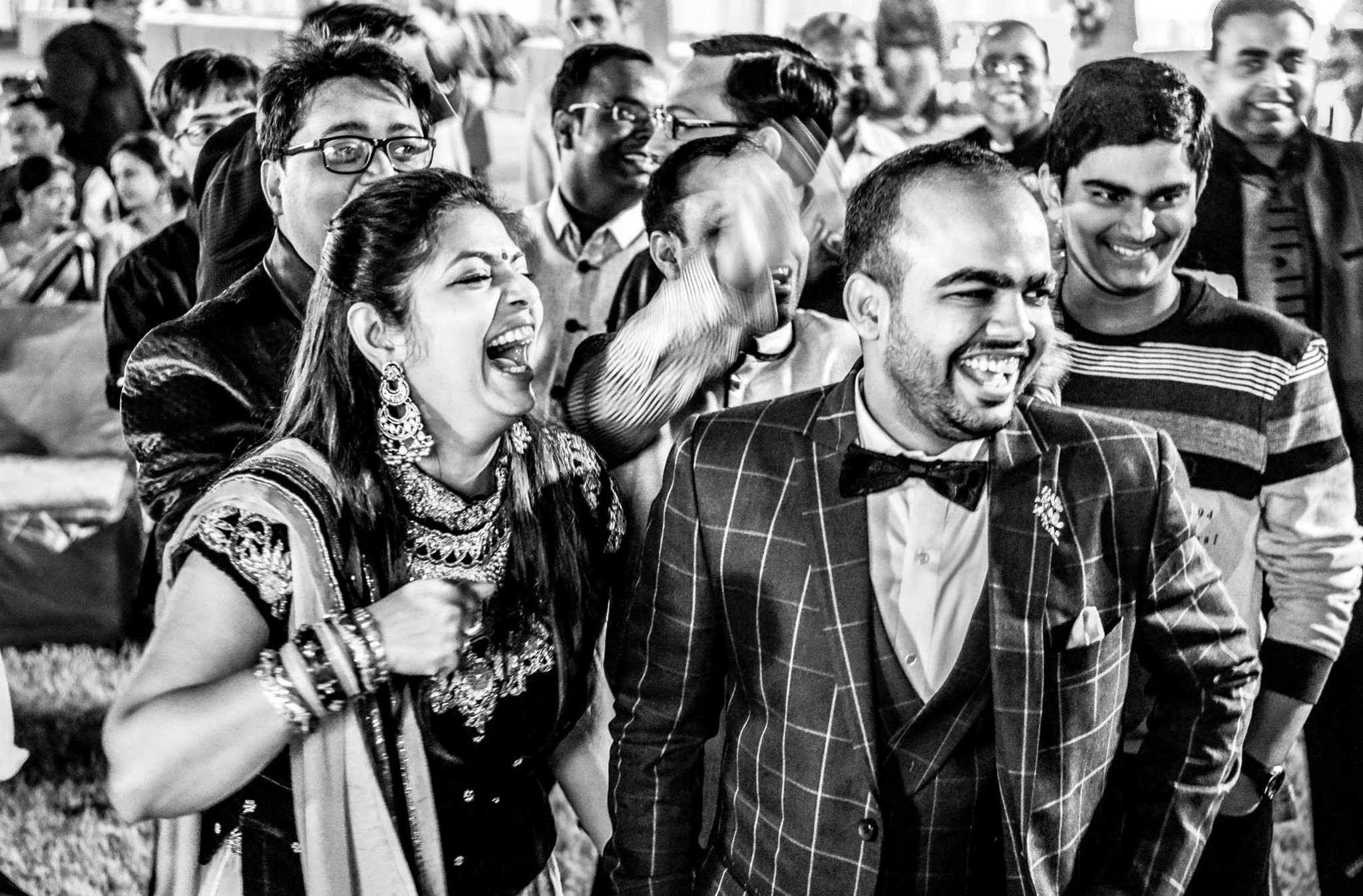
Wedding venues in Kolkata range from traditional homes to banquet halls, clubs, hotels and outdoor properties. Every location has different lighting. Decorative lights may look beautiful to the eye but can create difficult colour conditions for cameras. Professional wedding photography therefore sometimes requires additional lighting. The objective should not be to make the wedding look like a studio. Good lighting should preserve the atmosphere of the venue while allowing natural skin tones and clear photographs.
Wedding Films Require Good Audio
Photography preserves individual moments. Film preserves movement and sound. For wedding cinematography, natural audio can make an enormous difference. The sound of conch shells, ululation, family conversations, laughter, speeches and the voices of the couple can make a film feel personal years later. Good wedding cinematography therefore requires attention to audio as well as beautiful camera movement.
Do Not Forget the People Around the Couple
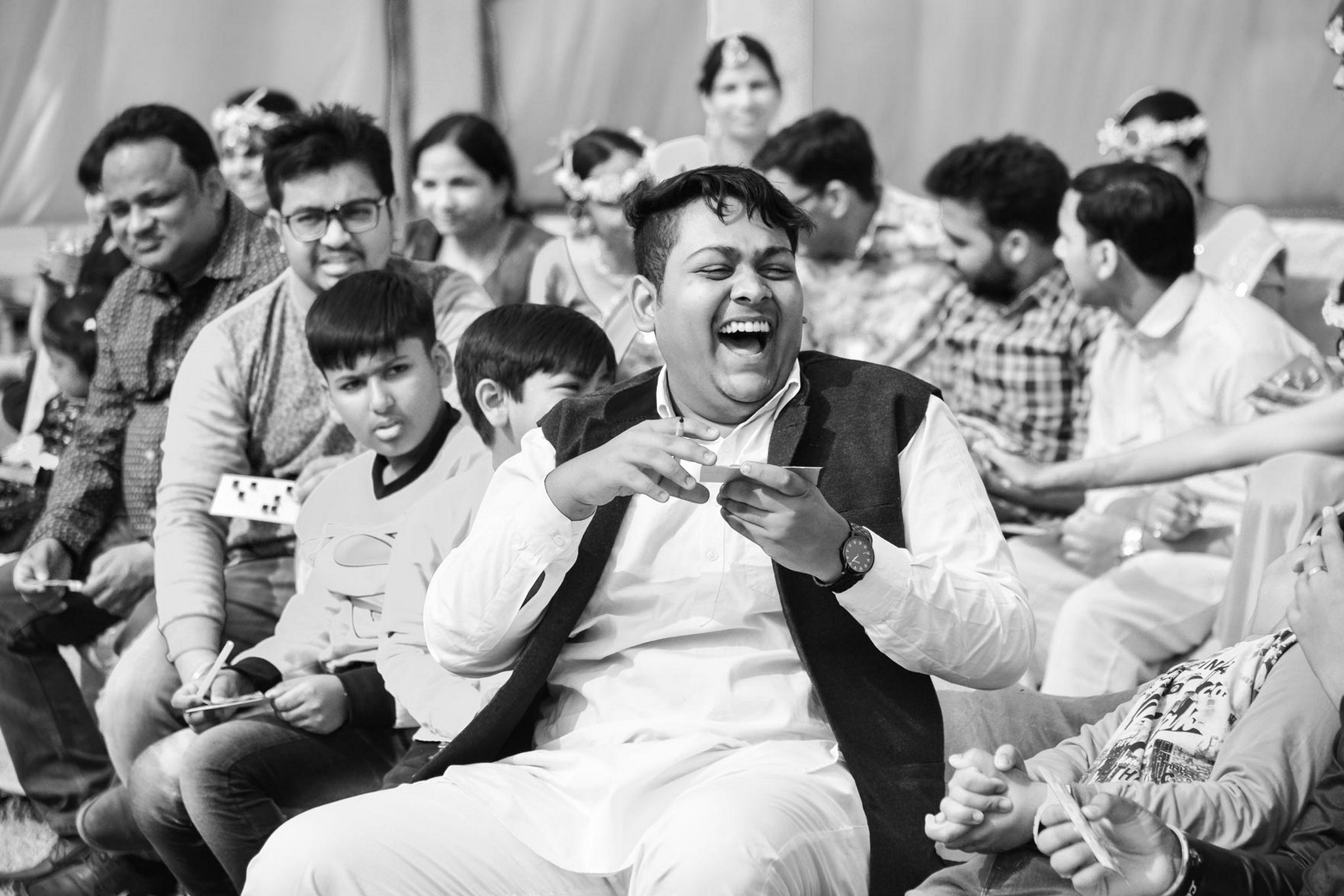
A wedding photographer naturally concentrates on the bride and groom. But a wedding story becomes much richer when it includes everyone around them. Parents watching quietly from the side. A grandfather greeting the groom. Children falling asleep during a late ceremony. Friends laughing behind the couple. A mother’s expression during Bidaai. These photographs may not be planned, but they frequently become favourites.
How Many Photographers Do You Need?
There is no fixed answer.
A small wedding may require a compact team.
A large Bengali wedding with hundreds of guests and simultaneous activities may require several photographers and cinematographers.
The important question is not simply how many people are holding cameras.
The team should have clearly defined responsibilities so the same moment is not being photographed by everyone while something else is missed.
Meet Your Photographer Before the Wedding
Whenever possible, discuss the wedding schedule before the event.
Share important rituals, family requirements, venue information and any unusual plans. Also tell the photography team if there are particular people who are especially important to you. A photographer cannot know every family relationship simply by looking around the venue. A little planning can prevent important photographs from being missed.
Our Approach at DM Digitals
For us, Bengali wedding photography is not about manufacturing hundreds of dramatic poses. It is about balancing beautiful portraits with honest documentation. We want couples to remember what the wedding looked like, but also what it felt like.
That means photographing rituals carefully, observing families, anticipating emotional moments and creating portraits without turning the entire wedding into a photoshoot.
DM Digitals has been documenting weddings since 2000.
If you are planning a Bengali wedding in Kolkata, West Bengal or elsewhere in India, you can speak with our team about your dates, events, photography, cinematography and album requirements.